LEAP-2 Mission
Launching Expeditions for Aspiring Payloads - 2
.svg)
.webp)
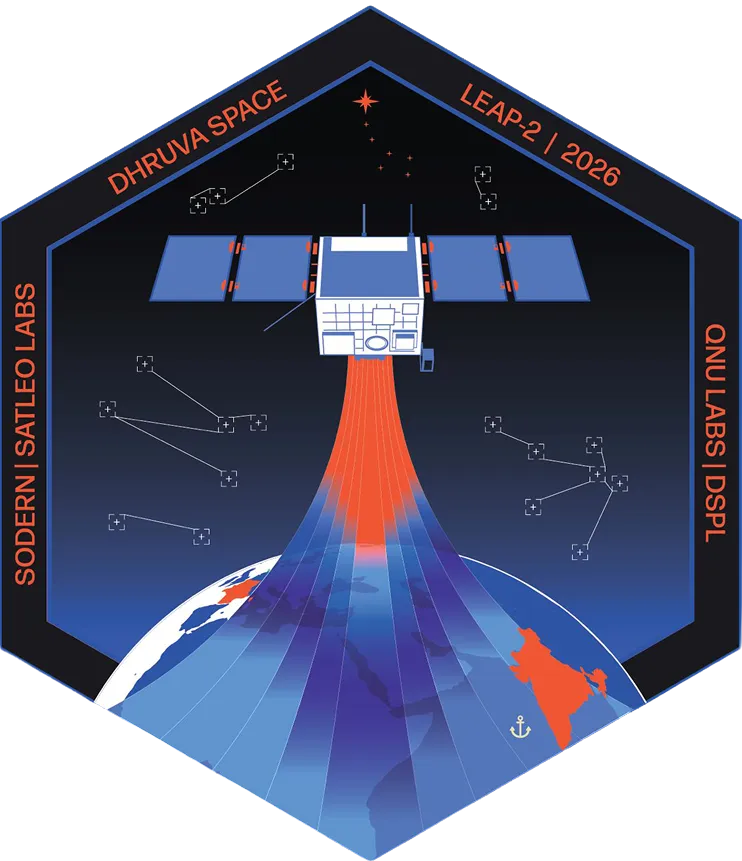
Hover for specifications
Colours yellow and green have been incorporated to represent the national colours of our partner nation, Australia.
‘Swoosh’ element shows the orbit and the captured data
Earth includes India and Australia
Dhruva Space's P-30 Satellite Bus
Imagery payload and the Hyperspectral cone shows the imagery capturing & data-relay
Ursa Minor constellation & the biggest & brightest star is the Pole star (Dhruva Star)
Mission Details
Mission Specifications
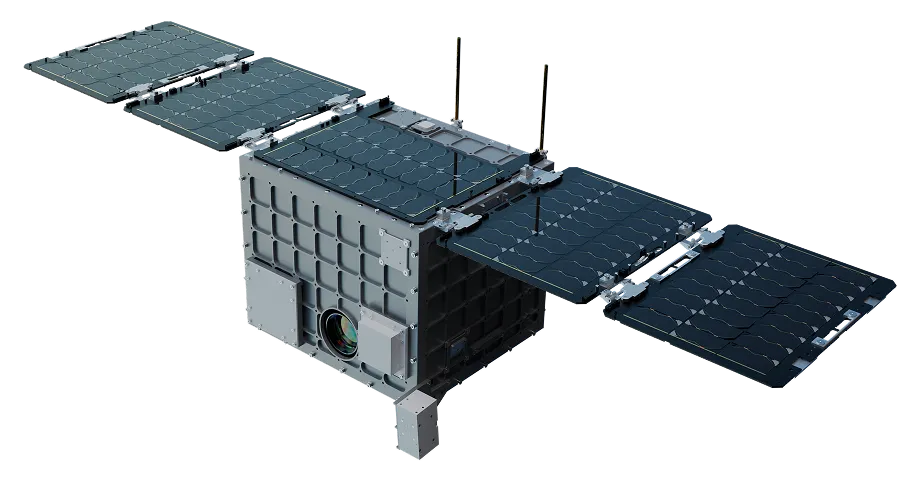
Satellite Orbital Deployers Range
I. HORUS (Sodern)
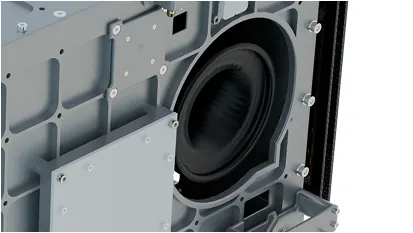

Payload Name
HORUS (Star Tracker)
Mass (kg)
1.65
Dimensions (mm3)
141 x 141 x 250
Peak Power (W)
12
Input Voltage (V)
24 - 50
Data Interface
MIL-STD-1553
- Autonomous optical determination of spacecraft attitude using stellar references
- Embedded star catalogue and attitude-computation algorithms
- Designed for high-accuracy pointing across LEO, MEO and GEO missions
- Robust operation under high slew rates, stray light and radiation environments
(Salient features shared by Sodern)
Horus star tracker integrates electronics, software, and optics into a compact and lightweight housing. Its autonomous architecture allows it to withstand high mechanical constraints and severe environments (extreme temperatures, radiation, stray light…).
- Easy integration
- Robustness in acquisition and tracking ≤6 deg/s | ≤8 deg/s
- Precision XY/Z 1.6/11 arcsec
- Lifetime in orbit10 years in LEO | 18 years in GEO
Get a quote
2. QRNG SIP Module (QNu & DS)
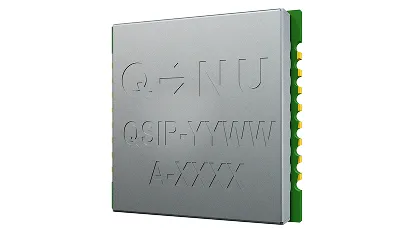

Payload Name
QRNG SIP Module
Mass (kg)
~0.0016
Dimensions (mm3)
15.5 x 15.5 x 4 (LxWxH)
Peak Power (W)
0.033 (Supply current is ~ 10 mA)
Input Voltage (V)
3.3
Data Interface
UART
- Generates true random numbers from inherently unpredictable quantum processes
- Provides a high-entropy source for cryptographic key generation
- Designed as a compact hardware security module for integration into space systems
- Enables quantum-secure approaches to spacecraft communications and data protection
Get a quote
3. AIS Receiver (DS)

Payload Name
AIS Receiver
Mass (kg)
0.845
Dimensions (mm3)
93 x 87.2 x 25
Peak Power (W)
1350 mW (5 V input, 25°C)
Input Voltage (V)
4.5 - 40
Data Interface
RS422
- Receives Automatic Identification System signals transmitted by vessels
- Enables space-based detection, identification and tracking of maritime activity
- Extends vessel monitoring beyond the coverage of terrestrial AIS infrastructure
- Supports maritime domain awareness and monitoring of activity at sea
Get a quote
4. TAPAS-1 Thermal Imager (SatLeo Labs)
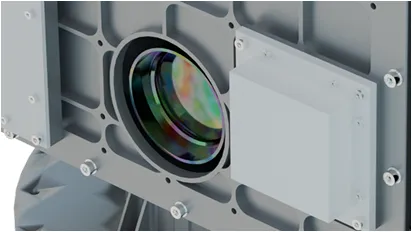

Payload Name
TAPAS-1 (Thermal Imager)
Mass (kg)
PMU=1.018 kg, AU=0.147 kg
Dimensions (mm3)
PMU: 146.03 x 98 x 98
AU: 111.5 x 93.5 x 24.8 (LxWxH)
AU: 111.5 x 93.5 x 24.8 (LxWxH)
Peak Power (W)
10
(Nominal Power = 7.5 )
(Nominal Power = 7.5 )
Input Voltage (V)
12 - 18
Data Interface
SPI
- Captures high-resolution thermal data by sensing infrared radiation from Earth's surface
- Designed to identify fine-scale temperature variations and thermal signatures
- Enables applications including urban heat monitoring, agriculture, wildfire detection and environmental monitoring
- Demonstrates the thermal imaging and processing architecture for SatLeo's planned thermal intelligence constellation
Get a quote
(Salient features shared by SatLeo Labs)
- Thermal Earth Observation: Dedicated payload for capturing thermal information that is not visible in conventional optical imagery.
- LWIR Sensing: Thermal-band imaging capability leveraging SatLeo Labs’ expertise in Long-Wave Infrared (LWIR) sensing.
- Compact CubeSat-Class Payload: Designed for integration into a compact satellite platform, enabling cost-effective thermal data acquisition from LEO.
- Commercial Thermal Data: Enables SatLeo to generate and make commercially available thermal Earth observation data from orbit.
- Technology Demonstration: First in-orbit validation of SatLeo’s thermal sensing, calibration and data-processing capabilities.
- Multiple Applications: Thermal data designed to support agriculture, climate monitoring, urban heat mapping, disaster management and infrastructure monitoring.
- Foundation for PYRO [Flagship Mission]: Provides critical flight heritage, operational learning and technology validation for SatLeo’s next-generation PYRO thermal satellite constellation.
.webp)

.svg)

.svg)